
Pestbgone logo

Rodent Control

Rats and mice cause real damage and real distress once they move indoors. Rodent control covers homes, outbuildings and business premises across the South East and South West, and it starts the same way every time: a proper assessment of what is present, where it is getting in, and what is keeping it there.

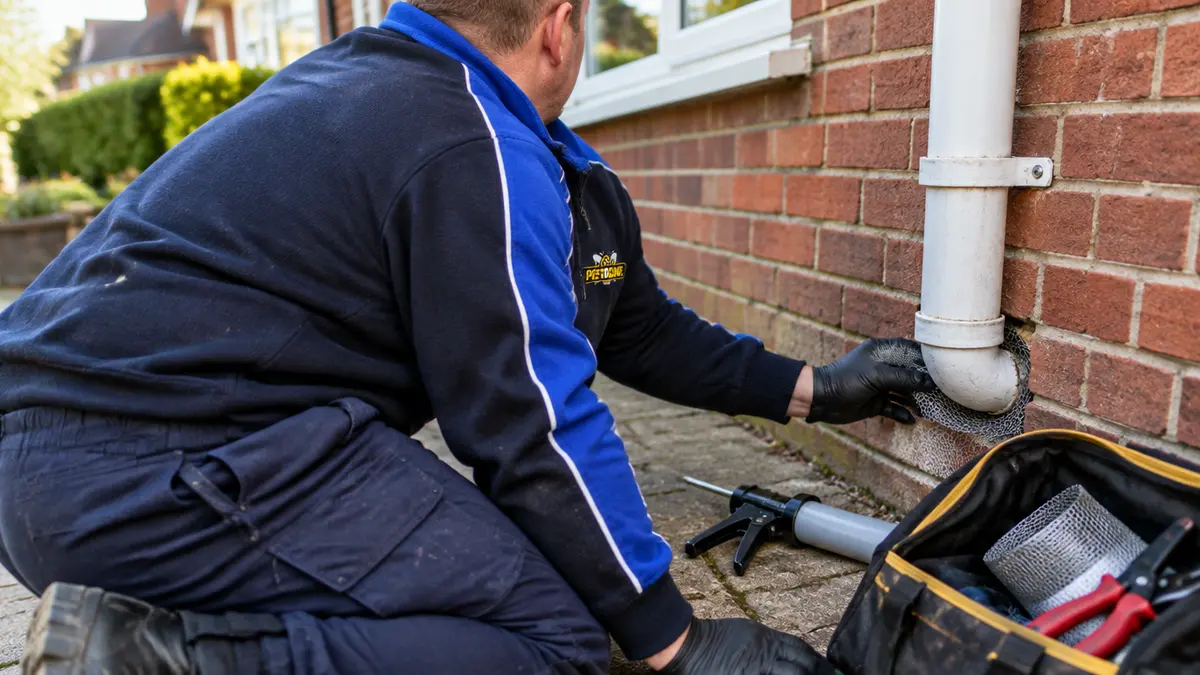
Pestbgone technician in uniform pressing steel proofing mesh into the gap around a soil pipe at the base of a brick wall

Rodent control, in plain terms

Rodent control is the full arc of dealing with rats and mice: confirming which species is present, bringing the activity under control, and then closing the gaps and changing the conditions that let them in. Treatment on its own usually only buys time, so we treat control and proofing as one job.

It helps householders dealing with noises in the loft or droppings in the kitchen, landlords and property managers responsible for several buildings, farmers and smallholders, and businesses of every size from village shops to food-handling premises.

The right approach depends on the pest, the property and what the assessment finds. House mice in a loft, brown rats entering through a defective drain and rodents around a commercial kitchen are three different problems, and they are not solved in the same way.

Signs you may need rodent control

Rodents are mostly nocturnal and are rarely seen until numbers build, so most people meet the evidence before the animal. The signs below are the usual starting points.

  • Droppings

    Dark, spindle-shaped droppings along walls, inside cupboards, in lofts and under sinks. Rat droppings are typically around 12 to 20mm long; mouse droppings are much smaller, around 3 to 8mm, and look like grains of dark rice.

  • Noises at night

    Scratching, scurrying or gnawing from lofts, cavity walls or under floorboards, usually after dark when the building goes quiet.

  • Gnaw damage

    Rodents gnaw throughout their lives because their incisor teeth grow continuously. Tooth marks on wood, plastic pipework, cable casings and even softer metals are a clear sign of established activity.

  • Smear marks

    Greasy rub marks along well-used routes, where fur has polished the same run hundreds of times. Look along walls, pipe runs and beam edges.

  • Nests and burrows

    Mice shred paper, insulation and fabric to build nests in hidden voids. Brown rats burrow into earth banks, and under sheds, compost heaps and paving.

  • Tracks and tail marks

    Footprints in dusty lofts or storage areas, sometimes with a tail line dragged between them.

  • Damage to stored food

    Packets in pantries, pet food bags and animal feed opened or holed, with debris dragged away to a nest site.

  • A lingering smell

    An ammonia-like urine smell in enclosed spaces such as cupboards and loft hatches, particularly where mice are established.

The rodents behind most problems

Britain has two species of rat, of which the brown rat is by far the most common, plus the house mouse, which is the mouse of indoor life almost everywhere. Identification still matters, because rats and mice behave very differently.

Brown rat

Rattus norvegicus

The common UK rat. Brown rats live in burrows, drains, sewers, outbuildings and around bird feeders and compost, and often enter buildings through defective drains or gaps around pipework. They are cautious animals that avoid new objects in their territory, which is one reason control takes a planned approach rather than a rushed one.

Read about rats

House mouse

Mus musculus

Small, light and remarkably adaptable. House mice survive on very small amounts of food and water, climb and swim well, and squeeze through surprisingly narrow gaps, which is why proofing a building against them is detailed work. Indoors they breed quickly and quietly, so a small problem grows without being noticed.

Read about mice

Black rat

Rattus rattus

Far less common in Britain, and usually associated with ports, shipping and older buildings. It is an agile climber, so it is more often found high in a building than at ground level. If the assessment points to a black rat, the plan changes with it.

Squirrels and edible dormice, known as glis glis, are rodents too, but they are handled as wildlife rather than as a rodent control call. If your noises turn out to be one of these, we will say so and point you to the right approach.

Wildlife ManagementGlis glis in the pest library

What assessment and treatment involve

Every job starts with a survey rather than a bait box. Until the species, the extent of the activity and the entry points are known, treatment is guesswork.

  1. The survey

    A walk-through of the affected areas and the vulnerable parts of the building: lofts, voids, kitchens, outbuildings, drains and the exterior. We look for droppings, runs, smear marks, gnawing and access points, and we ask about the history of the problem.

  2. Identification

    Droppings, damage and behaviour identify the species and give a rough picture of how established the colony is. Rats and mice need different strategies, so this step decides everything that follows.

  3. A treatment plan

    The plan depends on the property and the pest. It may involve secured bait points, trapping, or both, placed where they will work and where children, pets and non-target wildlife cannot reach them. Any professional rodenticide is used in line with its label and current requirements, and placements are recorded.

  4. Proofing and habitat

    Closing entry points and removing the food, water and shelter that sustained the colony. Proofing is what stops the next rodent walking in behind the last one.

  5. Follow-up

    Activity is re-checked, and bait and equipment are removed once the job is done. Follow-up matters: it confirms the treatment has worked and leaves the site clear.

Domestic and commercial premises

Homes and smallholdings

In homes, rodents favour lofts, cavity walls, kitchens, garages, sheds and garden areas with bird feeders, compost heaps or chicken runs. The survey covers all of these, not just the room where you saw the animal.

We work discreetly and explain each step in plain English, including what to do, and what to avoid, while treatment is under way.

Businesses

In commercial premises the stakes are higher: stock, hygiene ratings, audits and the reputation of the business. Rodents contaminate whatever they cross with urine and droppings, so early and quiet resolution matters.

For businesses we assess the site as an operation, not just a building: waste storage, deliveries, staff areas and the structure itself. Arrangements can be reactive or ongoing, and what any arrangement includes is agreed before work starts.

Prevention and follow-up

Controlling the active infestation is only half the job. Rodents return to places that offer food, water, shelter and a quiet way in, so prevention is about removing as many of those as a property allows.

After treatment, follow-up visits confirm that activity has stopped, that any bait or equipment has been removed and that proofing is standing up to the weather. If the assessment showed weaknesses that could let new rodents in, you will be told what they are and what can be done about them.

  • Stored food, including pet and animal feed, kept in sealed, gnaw-resistant containers.
  • Refuse and recycling kept in bins with sound, closed lids, away from doors where possible.
  • Bird feeders used sparingly, cleaned regularly and positioned away from the building, with spilt seed cleared.
  • Compost managed so it does not become a burrow site.
  • Gaps around pipework, vents and cable entries checked and sealed with proofing-grade materials.
  • Drains and manholes kept sound, as they are a frequent entry route for brown rats.
  • Vegetation and stored items kept clear of external walls, which removes cover for runs and burrows.

Frequently asked questions

Droppings are the quickest guide: rat droppings are typically 12 to 20mm long, while mouse droppings are around 3 to 8mm and look like dark grains of rice. Rats are cautious and travel along established runs; mice explore more freely and are often heard across a wider area. The survey confirms which is present before anything is placed.

It would not be honest to promise that. Control depends on the species, the size of the infestation and the property. A small mouse problem in a loft may be resolved quickly; an established rat problem linked to a drain or an outdoor colony usually takes a planned series of visits. You will be told what to expect after the survey.

Any baiting or trapping is planned with the household in mind. Materials are placed in secure locations, out of reach, and you will be told where they are and what precautions to take while treatment is under way.

Common routes include defective drains and manholes, gaps around pipes and cable entries, gaps under doors, and climbing routes such as drainpipes, overgrown vegetation and overhanging branches. Mice need far less room than rats. The survey identifies the actual routes on your property rather than the usual suspects.

Proofing is the physical closing of entry points with materials rodents cannot easily defeat, combined with removing the conditions that attracted them. It is the difference between a solved problem and a recurring one, so it is part of the treatment plan rather than an optional extra.

Possibly, but not necessarily. Noises after dark are often mice or rats, while noises during the day, especially in the morning and late afternoon, can point to squirrels or, in some areas, edible dormice. The survey identifies the animal before any treatment is decided.

Yes. Outdoor populations around burrows, sheds, compost and bird-feeding areas are a common source of indoor problems, and they are assessed as part of the same visit.

It depends on the property, the extent of the activity and the follow-up needed, so we quote after the survey rather than from a fixed price list. Send us the details through the contact page or call your local team and we will talk it through.

Dealing with a pest problem?

Call your local team or send us the details and we will call you back.

We use cookies to make this site work and, with your permission, to understand how it is used. You can accept all cookies, reject non-essential cookies, or manage your preferences.

Cookie Policy